Table of Contents
The impact of Trump tariffs on India could reshape trade flows, raise costs for exporters, and trigger diplomatic negotiations. Higher duties on steel, textiles, and IT-linked goods may affect India’s global competitiveness, while U.S. consumers could face price hikes. Analysts suggest India may respond with countermeasures, influencing bilateral ties, supply chains, and investment decisions in 2025.
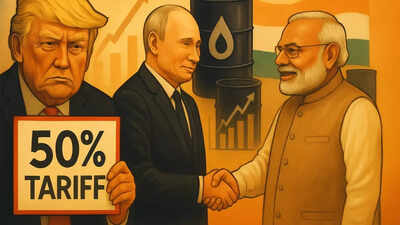
The impact of Trump’s tariffs on India is among the most severe trade shocks India has experienced in recent years. The announcement of a 50 percent tariff on Indian exports by the US under Donald Trump during his second term placed enormous strains on India’s automotive component, textile, gem and jewelry, leather, and seafood industries.
During his first term, Trump labeled India the “tariff king,” a practice that has preoccupied Indian policymakers for years. Now, as the impact of Trump’s tariffs on India becomes a reality, industry, exporters, workers, and policymakers alike are trying to assess the scale of the challenge.
The Impact of Trump Tariffs on India
The impact of Trump’s tariffs on India stems from an Executive Order (14329) signed on August 27, 2025. The order doubles tariffs on Indian exports from 25% to 50%, citing India’s oil and defense trade relations with Russia.
The tariffs now apply to key Indian goods: textiles, gems, jewelry, seafood, and leather products.
Sectors such as pharmaceuticals, electronics, and petroleum products are exempt.
Aluminum, iron, and copper remain subject to only a 25% tariff.
According to India’s Ministry of Commerce, exports to the US worth over $60 billion will now be subject to a new 50% tariff. This represents two-thirds of Indian shipments to the country’s largest export market.

Impact of Trump tariffs on India Automotive Components Industry
Automotive Industry as a Key Export Factor
India’s automotive component industry, valued at approximately $70 billion, plays a key role in exports. Around $3.4 billion worth of auto parts are exported to the US annually. Although the industry remains subject to a 25% tariff (for now), the impact of Trump’s tariffs on related industries such as steel, aluminum, and textiles is likely to increase costs.
Margins Under Severe Pressure
Since Indian manufacturers already operate on tight margins, a sharp increase in tariffs will have a direct impact on profitability. Industry leaders warn:
- Cost disadvantages of 25–30% compared to Vietnam, Mexico, and Turkey could push US buyers into alternative markets.
- If the situation persists, supply chains built over decades could collapse.
- India risks losing its place in the global automotive supply chain.
Impact of Trump tariffs on India on key sectors
Textiles and Clothing
- The Indian textile industry contributes approximately $37.7 billion to its exports, 29% of which goes to the US.
- The new tariffs could put Indian garments at a 30% cost disadvantage compared to Bangladesh or Vietnam.
- A $10 shirt made in India could now cost $16.40 in the US market, making it price-competitive.
Gemstones and Jewelry
- India exported $10 billion worth of gemstones and jewelry to the US in fiscal year 2024.
- A 50% tariff makes Indian diamonds and jewelry uncompetitive.
- Up to 200,000 jobs in the diamond-polishing centers of Surat and Mumbai could be at risk.
Seafood
- Seafood exports worth $7.4 billion are at risk.
- Shrimp exports, which account for 40% of total exports, face catastrophic losses.
- Farmers in Andhra Pradesh could experience a drop in demand as US buyers withdraw.
Leather and Footwear
- India’s $4.1 billion leather export industry is facing upheaval.
- US buyers, who export $870 million, could shift to Vietnam and Indonesia.
- Massive job losses could occur in the key centers of Kolkata, Kanpur, and Chennai.
Macroeconomic Impact
The impact of Trump tariffs on India goes beyond manufacturing. Economists warn:
- GDP growth could slow by 0.4–0.5% in FY26.
- Exports to the US could decline by more than 40%, leading to rising unemployment.
- Industries employing millions (textiles, gemstones, leather) could face an existential crisis.
A Bloomberg analysis shows that if tariffs continue, India could lose $40 billion in annual exports, destabilizing its foreign exchange reserves and widening its current account deficit.
Government Response to the Impact of Trump’s Tariffs on India
Prime Minister Narendra Modi described the tariffs as part of an era of “economic self-interest.” He promised reforms to counteract this:
- Adjustments to the Value Added Tax (GST) to reduce costs for exporters.
- Renewed efforts toward self-sufficiency in the manufacturing sector (Aatmanirbhar Bharat).
- Bilateral trade talks with the US are expected to address this.
However, analysts warn that reforms will take time, while the industry faces an immediate collapse in orders.
Read also: Trump Gold Card Visa Program Promises Wealthy Foreigners a Fast Track to U.S. Residency
Global Winners of Trump Tariffs on India
Competing nations are already gearing up to capture India’s market share.
- Bangladesh and Vietnam will gain ground in textiles.
- Mexico and Turkey in automotive.
- China and Indonesia in footwear and leather.
Once global buyers shift gears, regaining the market will be a mammoth task, even if the tariffs are withdrawn.
Market Reaction to the Impact of Trump Tariffs on India
Indian markets reacted sharply:
- The Sensex fell 849 points on the day the tariffs were announced.
- The Nifty fell 255 points as automotive and textile stocks tumbled.
- Investor wealth fell by Rs 6 billion in a single day.
Read also: PM Modi Inaugurates Wildlife Centre At Vantara, Spends Time With White Lion Cubs
The Way Forward for India
The impact of Trump’s tariffs on India is one of the most difficult trade challenges India has faced in decades. They threaten jobs, GDP, and India’s role in global value chains. While policy measures are put in place, much depends on:
- Bilateral talks with Washington.
- Diversification of export markets to Europe, ASEAN, and Africa.
- Domestic reforms to make Indian exports more competitive.
For now, exporters, workers, and policymakers must